Category: Uncategorized

  • Poetcore Study Aesthetic: Dark Academia Desk with Dried Botanicals and Ink

    Some desks don’t just hold books — they hold entire worlds of ink, petals, and half-finished thoughts.

    This is one of those desks.

    A poetcore study desk bathed in the quiet intimacy of dark academia. Stacked leather-bound volumes cradle dried botanical specimens pressed tenderly between their pages. Ink stains bloom across aged manuscript paper like accidental constellations. A quill rests mid-thought in a crystal inkwell, while a single candle casts its warm, flickering shadow. A dark rose slowly loses its petals to the dark wood surface, each one a quiet surrender. Handwritten poetry pages overlap open books, the air heavy with the scent of old leather, dried herbs, and fresh ink.

    This is what study looks like when it loves the world.

    The Living Heart of Poetcore

    In the poetcore & dark academia aesthetic, the desk becomes a living grimoire. Botany and poetry have never been separate — they have always belonged together. Pressed flowers become bookmarks and metaphors. Ink-stained fingers turn the page of both a sonnet and a botanical illustration. The single candle is not decoration; it is the only light brave enough to witness the slow, deliberate act of creation. Here, knowledge is not cold or clinical. It is warm, messy, fragrant, and deeply felt.

    This moment sits perfectly between your gothic greenhouse aisles and midnight apothecary workbenches — the same ink-stained hands that tend moody botanicals now write by candlelight.

    How to Create Your Own Poetcore Study Desk

    You don’t need a grand library to summon this exact atmosphere. All it takes is intention and a few honest objects:

    • Stack vintage leather-bound books (real or beautifully bound journals)
    • Press your own botanicals and tuck them between pages
    • Use a real quill or fountain pen in a glass inkwell — let the stains happen
    • Add a single candle (never electric) and let the wax drip
    • Place one dark rose or dried floral element that can slowly surrender its petals
    • Scatter handwritten poetry or notes on aged paper for that lived-in depth

    Keep the palette deep charcoal, candlelight gold, and muted botanical greens. The shadows are part of the poetry.

    If this desk — where plants and poems share the same quiet space — speaks to the part of you that annotates in the margins and presses flowers between pages, you’ve found your aesthetic home.

    Pin it. Write at it. Let the petals fall where they will.

    Explore more boards: → Gothic Greenhouse Aesthetic → Apothecary Aesthetic & Herb Garden → Botanical Witch Aesthetic → Moody Botanicals & Dark Plants

    #Poetcore #DarkAcademia #PoetcoreAesthetic #BotanicalAesthetic #StudyAesthetic #DarkAcademiaDesk #PoetcoreStudy #MoodyBotanical
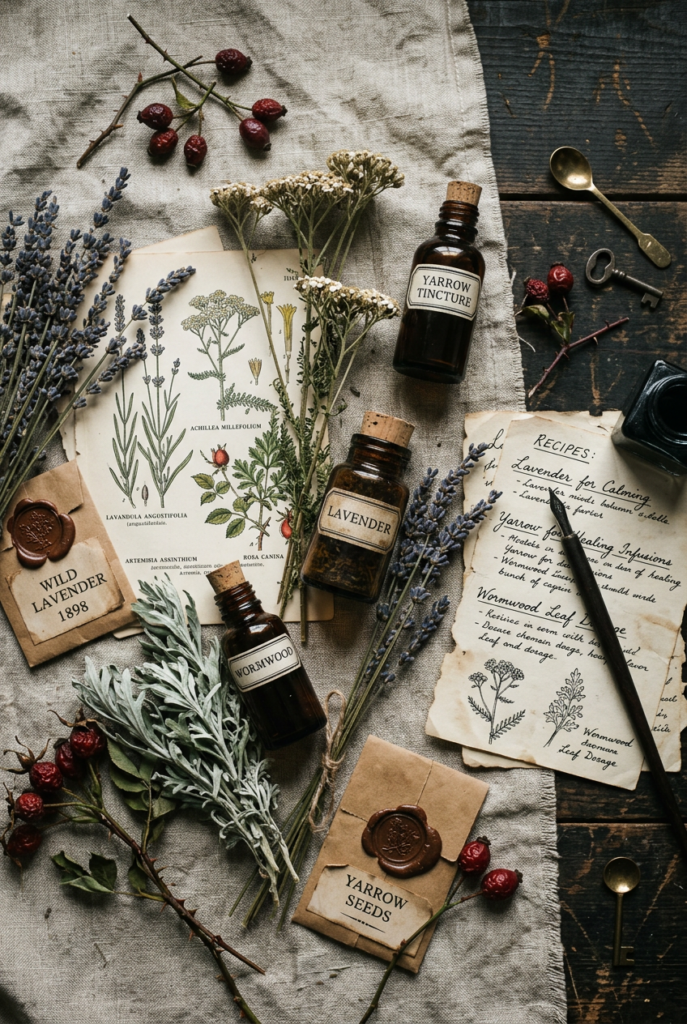
  • Apothecary Aesthetic Plants: Flat Lay of Dried Herbs and Dark Glass Vials

    Some arrangements aren’t just pretty — they are rituals paused mid-breath.

    This is one of those moments.

    A quiet flat lay of apothecary aesthetic plants on aged linen. Lavender sprigs, yarrow, wormwood, and rosehips rest in deliberate clusters, their dried stems still carrying the memory of moonlit gardens. Dark glass vials stand like silent sentinels beside them. An ink quill lies mid-sentence on handwritten herbal notes, while scattered pages from old botanical illustrations curl gently at the edges. Wax-sealed seed packets and muted green tones bleed into sepia shadows across dark weathered wood. Every element placed slowly, with intention.

    This is the art of the herbalist, captured in stillness.

    The Sacred Geometry of the Herbalist’s Flat Lay

    In the apothecary aesthetic, nothing is random. Every dried petal and dark glass vial tells a story: lavender for peace, yarrow for protection, wormwood for vision, rosehips for heart-healing. The vintage botanical pages become both reference and spellbook. The quill mid-sentence reminds us that knowledge is never finished — it is written, dried, bottled, and passed on. This flat lay belongs on the same altar as midnight workbenches and dusk kitchen windowsills: the bridge between living garden and preserved craft.

    It is dark academia made tangible. Botanical witchcraft made visible.

    How to Create Your Own Apothecary Flat Lay

    You don’t need a photography studio to summon this exact hush. All it takes is reverence and a few honest objects:

    • Gather your dried herbs on a piece of aged linen or vintage cloth
    • Use small dark glass vials (amber, cobalt, or deep green) for seeds, petals, or tinctures
    • Add an antique ink quill (or a modern one dipped in sepia ink) and a few handwritten notes
    • Scatter pages from old botanical books or prints (thrifted or reprinted)
    • Include wax-sealed packets or tiny corked bottles for texture
    • Shoot or arrange in soft, diffused light — the muted green and sepia palette does the rest

    Let the composition breathe. The most powerful flat lays feel discovered, not staged.

    If this quiet arrangement of dried herbs and dark glass vials speaks to the herbalist in you — the one who still labels jars by candlelight and presses flowers between pages — then you’ve found your corner of the craft.

    Pin it. Arrange it. Keep the old knowledge alive.

    Explore more boards: → Gothic Greenhouse Aesthetic → Botanical Witch Aesthetic → Moody Botanicals & Dark Plants → Dark Cottagecore Garden

    #ApothecaryAesthetic #BotanicalFlatLay #HerbWitch #DarkAcademia #ApothecaryPlants #HerbalWitch #MoodyBotanical #ApothecaryAestheticPlants

  • Apothecary Aesthetic Plants: Dark Cottage Kitchen Herb Garden at Dusk

    Some windowsills don’t just hold plants — they hold entire kitchens of quiet magic.

    This is one of those sills.

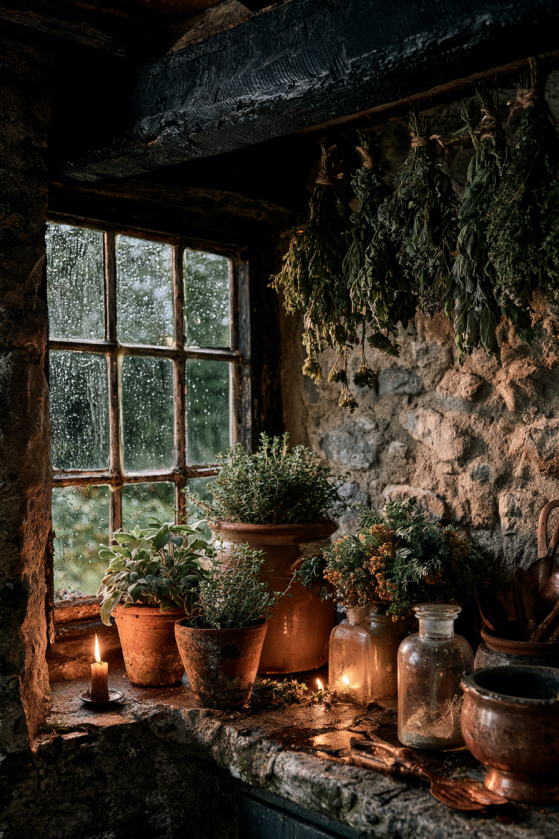
    A dark cottage kitchen windowsill alive at dusk. Terracotta pots overflow with sage, thyme, and mugwort, their leaves still carrying the scent of rain-soaked earth. Rain beads gently on the antique glass behind them, softening the last golden light into something hushed and intimate. Overhead, dried herb bundles hang heavy from a blackened wooden beam like fragrant offerings. On the stone ledge below, aged glass jars and copper utensils wait patiently. One lone candle flickers, its warm amber glow bravely pushing back the gathering dark.

    This is apothecary living — rooted, real, and deeply alive.

    The Magic of the Cottage Herb Windowsill

    In the apothecary aesthetic, the kitchen is never far from the craft. Here the line between cooking and spellwork dissolves. Sage for protection and cleansing, thyme for courage and healing, mugwort for dreams and vision — all growing right where tea is brewed and grimoires are read by candlelight. The rain-streaked glass and low dusk light turn an ordinary windowsill into something sacred: the perfect bridge between the dark cottagecore garden outside and the herbalist’s workbench inside.

    How to Create Your Own Dusk Herb Windowsill

    You don’t need a centuries-old cottage to summon this warmth. Start small and let it grow naturally:

    • Use classic terracotta pots for that authentic, earthy feel
    • Grow your own kitchen-and-magic herbs: sage, thyme, mugwort, rosemary, lavender
    • Hang small bundles of drying herbs from a beam, hook, or curtain rod
    • Embrace imperfect antique-style glass — the rain beads are part of the charm
    • Add aged glass jars and a few copper details for true apothecary depth
    • Light a single candle at dusk. The contrast between warm glow and gathering shadow is everything

    Let the herbs grow a little wild. The best apothecary kitchens feel lived-in, not styled.

    If this rain-kissed, candlelit herb windowsill speaks to your botanical witch heart, you already belong here.

    Pin it. Grow it. Keep the old craft alive.

    Explore more boards: → Gothic Greenhouse Aesthetic → Botanical Witch Aesthetic → Moody Botanicals & Dark Plants → Dark Cottagecore Garden

    #ApothecaryAesthetic #CottageKitchen #HerbGarden #DarkCottagecore #WitchyKitchen #ApothecaryPlants #HerbalWitch #MoodyBotanical

  • Apothecary Aesthetic Plants: Dark Herbalist Workbench with Dried Herbs

    There are workbenches that feel less like surfaces and more like living grimoires.

    This is one of them.

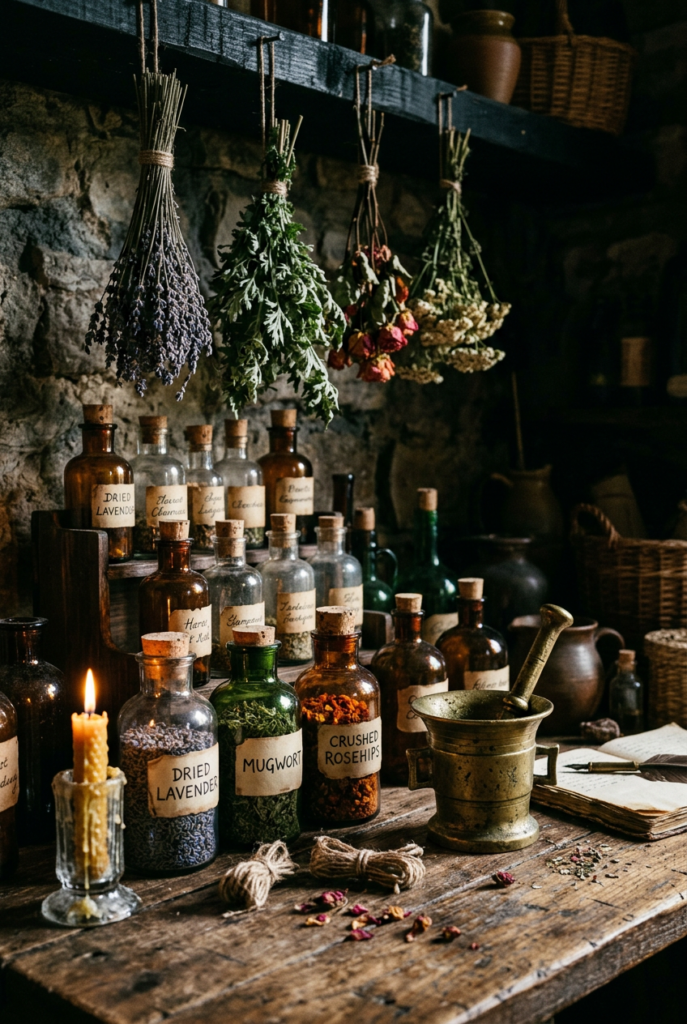
    An herbalist’s workbench after midnight. Rows of aged cork-stoppered glass bottles hold dried lavender, mugwort, and crushed rosehips. Bundles of herbs and roses hang overhead like suspended offerings. An antique brass mortar and pestle rests in quiet readiness, its surface worn smooth by centuries of use. Handwritten ink labels catch the warm flicker of candlelight on every specimen. The glow barely holds the darkness back — yet everything here feels perfectly alive.

    This is the apothecary aesthetic plants moment we all chase: the old craft, still practiced in the small hours, where every dried petal and tincture bottle carries both medicine and magic.

    The Heart of the Apothecary Workbench

    In the botanical witch aesthetic, the workbench is sacred ground. It is where the garden meets the grimoire — where you gather, dry, grind, and bottle the very plants you grew under moonlight. Lavender for calm, mugwort for dreams, roses for heart-work. The brass mortar and pestle becomes an extension of your own hands. The ink labels? They are spells in themselves.

    This scene belongs right beside your gothic greenhouse staging tables and moody botanicals. It is the next chapter: the harvest brought inside, sorted, honored, and transformed.

    How to Create Your Own Midnight Workbench

    You don’t need a centuries-old cottage to summon this energy. Start small and let it grow:

    • Collect aged glass bottles or vintage apothecary jars (thrift stores are full of them)
    • Dry your own herbs — lavender, mugwort, rose petals, rosemary — and hang them in small bundles overhead
    • Find (or thrift) a brass mortar and pestle — the patina is part of the spell
    • Use black or sepia ink for handwritten labels on every jar
    • Light just one or two candles. The shadows are not empty; they are part of the medicine.

    Keep the palette deep forest green, amber, and antique brass. Let the candlelight do the storytelling.

    If this dark herbalist workbench speaks to the part of you that still believes in the old ways — the quiet, ink-stained, candlelit ways — then you already belong here.

    Pin it. Tend it. Let the dried herbs whisper their secrets at midnight.

    Explore more boards: → Gothic Greenhouse Aesthetic → Botanical Witch Aesthetic → Moody Botanicals & Dark Plants → Dark Cottagecore Garden

    #ApothecaryAesthetic #HerbalWitch #DarkAcademia #BotanicalWitch #ApothecaryPlants #HerbGardenAesthetic #MoodyBotanical

  • Gothic Greenhouse Aesthetic: Towering Monstera in Misty Morning Light

    There are aisles that feel less like walkways and more like secret passages between worlds.

    This is one of them.

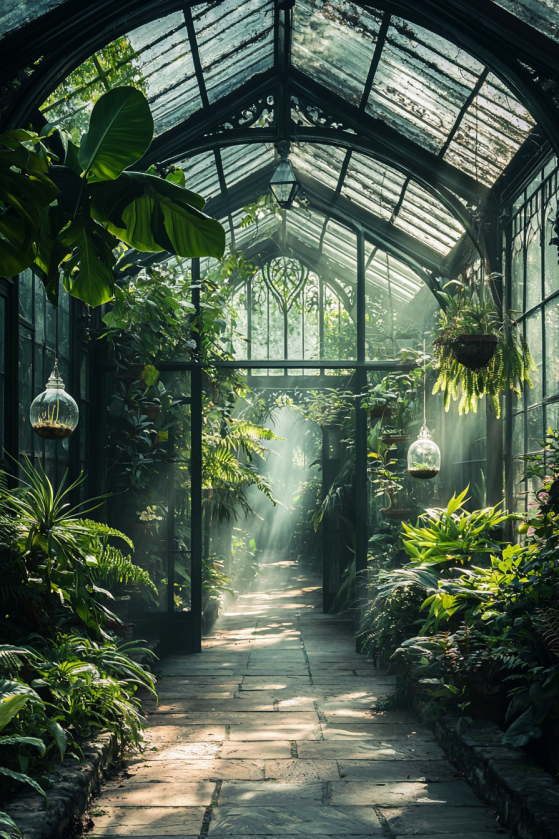
    A narrow gothic greenhouse aisle where towering Monstera deliciosa leaves rise like dark cathedral windows, pressing their dramatic cuts against mist-fogged glass. Victorian cast iron frames soar overhead, their architectural bones catching the first soft grey light of morning. Preserved botanicals drift inside delicate glass orbs, suspended like captured spells. Moss has claimed every stone, turning the floor into a living carpet of velvet green. The air is heavy with moisture and quiet reverence. This is where the green things go dark — and more beautiful for it.

    The Spell of the Towering Monstera

    In the gothic greenhouse aesthetic, scale matters. These giant leaves don’t simply decorate; they command the space. Backlit by misty morning light filtering through the glass ceiling, each fenestration becomes a lacework of shadow and subtle glow. The Victorian ironwork adds weight and history, reminding us that these structures were once built to house treasures from distant, fog-shrouded jungles. Here, the Monstera is no longer a houseplant — it is a gothic sentinel, a living grimoire page, a bridge between the botanical witch’s garden and the dark academia study.

    Every hanging orb, every moss-softened stone, every breath of mist tells the same story: this is a place that nurtures what prefers shadow to spotlight.

    How to Summon This Moment at Home

    You don’t need a Victorian conservatory to feel this exact hush (though we can all dream of one). Recreate the magic with intention:

    • Choose a tall, dramatic Monstera (or any large dark-leafed beauty) and let it climb or spread against a wall or window
    • Add antique cast-iron plant stands or vintage window frames for architectural presence
    • Hang small glass orbs or terrariums with preserved ferns, seed heads, or dried herbs
    • Layer moss over stones or use a mossy runner along a shelf
    • Keep the lighting low and diffused — sheer curtains, early morning light, or a single candle work wonders

    Let the mist happen naturally. The fog on the glass is part of the enchantment.

    If this towering, misty aisle speaks to the part of you that presses flowers between pages and whispers to houseplants at midnight, you’ve found your people.

    Pin it. Tend it. Let the green things go dark in your own space.

    Explore more boards: → Apothecary Aesthetic & Herb Garden → Botanical Witch Aesthetic → Moody Botanicals & Dark Plants → Gothic Garden & Reading Shed

    #GothicGreenhouse #MonsteraAesthetic #DarkBotanical #VictorianGarden #BotanicalGothic #MoodyBotanical #GothicGreenhouseAesthetic


  • Gothic Greenhouse Aesthetic: Dark Tropical Leaves and Antique Glass Cloches

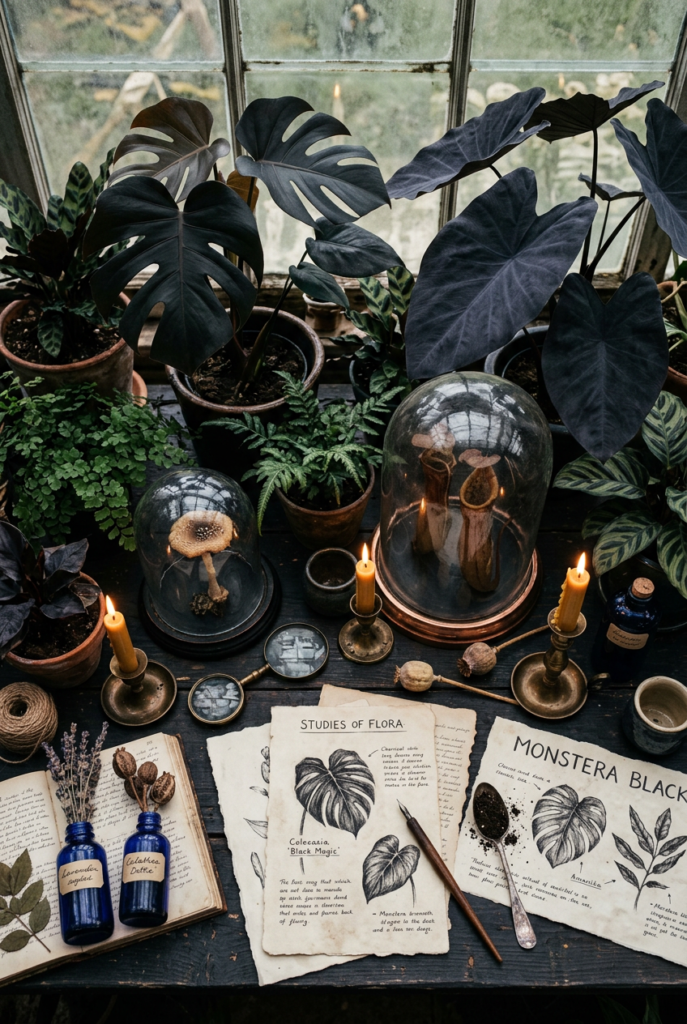
    Dramatic overhead view of a gothic greenhouse staging table, dense arrangement of tropical dark-leaf plants, black monstera, velvet-leafed colocasia, antique glass cloches over botanical specimens, scattered botanical sketches on aged paper, inky blue glass bottles with dried specimens, candlelight catching copper edges, deep green and charcoal palette, dark moody flat lay, magazine editorial style

    Ink-stained fingers and candlelit roots.

    Some tables don’t just hold plants — they stage entire spells.

    This is one of them.

    An overhead view of a gothic greenhouse staging table draped in velvet shadow. Black monstera leaves spread like midnight wings. Velvet-leafed colocasia catches the low flicker of candlelight, their deep tones almost drinking it in. Antique glass cloches rest over rare specimens like tiny crystal vaults, protecting secrets older than the iron frame around them. Scattered botanical sketches on aged paper lie beside inky blue glass bottles filled with dried curiosities — seed heads, pressed petals, fragments of forgotten rituals. Copper edges catch the flame for a fleeting second, then melt back into the dark.

    This is not decoration. This is darkness that grows.

    The Quiet Power of a Moody Staging Table

    In the gothic greenhouse aesthetic, every surface becomes an altar. Here, tropical leaves that belong in shadow — not harsh sunlight — take center stage. Black monstera and velvet colocasia thrive where light is low and intentional, turning the ordinary act of tending plants into something quietly ceremonial. The antique glass cloches don’t just protect; they frame each specimen like a page in a grimoire. The inky bottles? They hold the harvest, the memory, the medicine.

    This flat-lay moment belongs right beside your poetcore study nooks and apothecary altars. It’s the bridge between the living collection and the living spell — where botany and witchcraft share the same candlelit breath.

    How to Create Your Own Gothic Staging Table

    You don’t need a full greenhouse to summon this energy. Start with what you already love:

    • Choose your darkest tropicals: black monstera, velvet colocasia, raven ZZ, or any leaf that looks painted by midnight
    • Hunt for antique glass cloches (thrift stores and vintage shops are full of them)
    • Gather inky blue or deep amber bottles for dried specimens
    • Add aged paper, copper tools, and a single candle (or two)
    • Keep the palette deep green, charcoal, and brass — let the shadows do the rest of the work

    Arrange it once, then let it evolve naturally. The best gothic greenhouse tables never stay perfectly styled; they grow wilder, richer, and more personal with time.

    If this overhead view of darkness-that-grows speaks to the botanical witch in you, pin it, save it, live in it.

    Your own staging table is waiting to be tended.

    Explore more boards: → Apothecary Aesthetic & Herb Garden → Botanical Witch Aesthetic → Moody Botanicals & Dark Plants → Gothic Garden & Reading Shed

    #GothicGreenhouse #DarkPlants #BotanicalAesthetic #MoodyInterior #GothicHomeDecor #DarkBotanical #MoodyBotanical

  • Gothic Greenhouse Aesthetic: Misty Iron-Glass Interiors at Dawn

    Ink-stained fingers and candlelit roots.

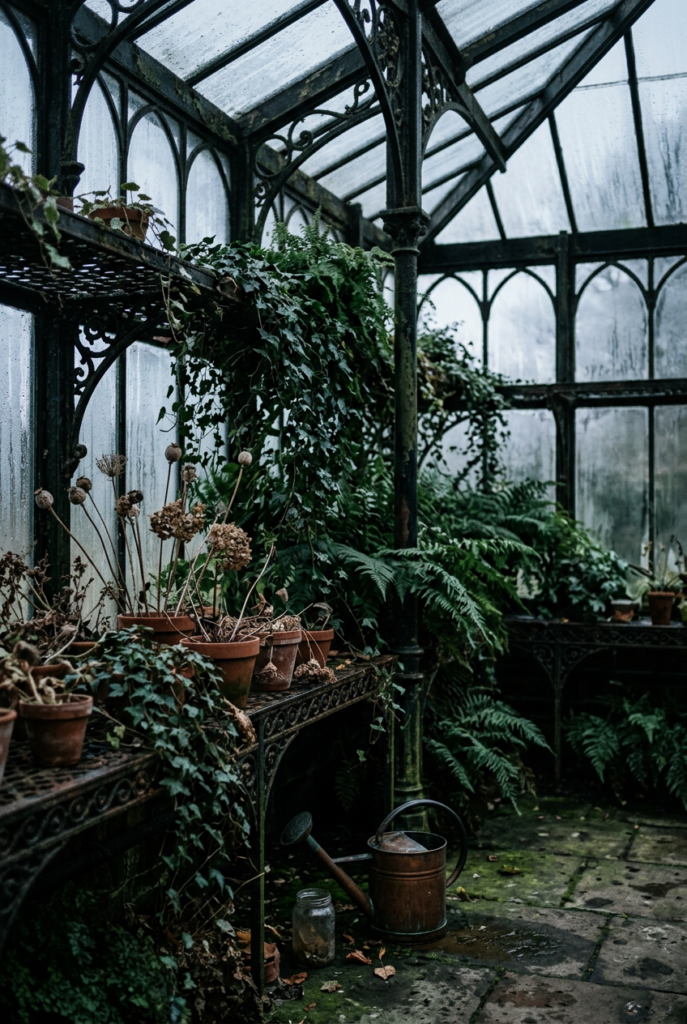
    There are mornings when the world still feels half-dreamed. When the first grey light slips between iron ribs and ancient glass, and the air itself is soft with condensation. This is the gothic greenhouse aesthetic at its most intoxicating — not the bright, sun-drenched conservatories of storybooks, but something older, quieter, and far more alive.

    Imagine it exactly as the image above captures: a Victorian iron-and-glass structure waking up in the half-light. Wrought-iron shelves heavy with trailing dark ferns. Moss creeping along stone paths like slow green velvet. Terracotta pots holding skeletal dried seed heads that look like tiny gothic crowns. An aged copper watering can resting on the floor, forgotten mid-ritual. Every pane of glass is fogged with mist, every leaf heavy with dew. The light is diffused, charcoal-soft, the color of old parchment and rain.

    This is not a place for bright geraniums or cheerful herbs. This is where the moody botanicals thrive — the ones that prefer shadow to sun, that grow more beautiful the darker the corner.

    Why the Gothic Greenhouse Calls to Us

    There is something profoundly dark-academia about these spaces. They feel like extensions of the library itself: quiet, scholarly, a little haunted. You can almost smell old leather bindings mixed with damp earth and crushed fern. Here, knowledge and nature have never been separated. Victorian plant hunters once filled these iron cathedrals with specimens from distant continents, cataloging them by candlelight in leather journals — the same journals we still press flowers into today.

    For the botanical witch, the gothic greenhouse is sacred ground. Every trailing vine becomes an ally. Every shadowed corner holds the promise of an apothecary harvest. The mist on the glass? A natural veil between worlds. The stone paths? Perfect for leaving small offerings of moon water or dried petals at dawn.

    How to Bring This Aesthetic Home

    You don’t need a full Victorian conservatory (though we can all dream). Start small:

    • Seek out antique iron plant stands or vintage terracotta
    • Choose deep, dramatic foliage: black mondo grass, raven ZZ, dark alocasia, trailing philodendron “micans”
    • Layer in aged copper, wrought iron, and stone
    • Keep the lighting low and diffused — a single candle or soft grey lamp does more than any grow light ever could
    • Let the glass (even a small cloche or terrarium) fog naturally. The mist is part of the spell.

    This aesthetic belongs on the same shelf as poetcore study nooks, apothecary altars, and dark cottagecore gardens. It is the living bridge between the pages of a grimoire and the soil itself.

    If this misty dawn greenhouse speaks to your ink-stained soul, you’re already home.

    Save this pin, wander the rest of Midnight Botanical, and let the shadowed florals find you.

    Explore more boards:

    Apothecary Aesthetic & Herb Garden → Botanical Witch Aesthetic → Moody Botanicals & Dark Plants → Gothic Garden & Reading Shed

    #GothicGreenhouseAesthetic #DarkBotanical #MoodyBotanical #BotanicalWitch #DarkAcademia