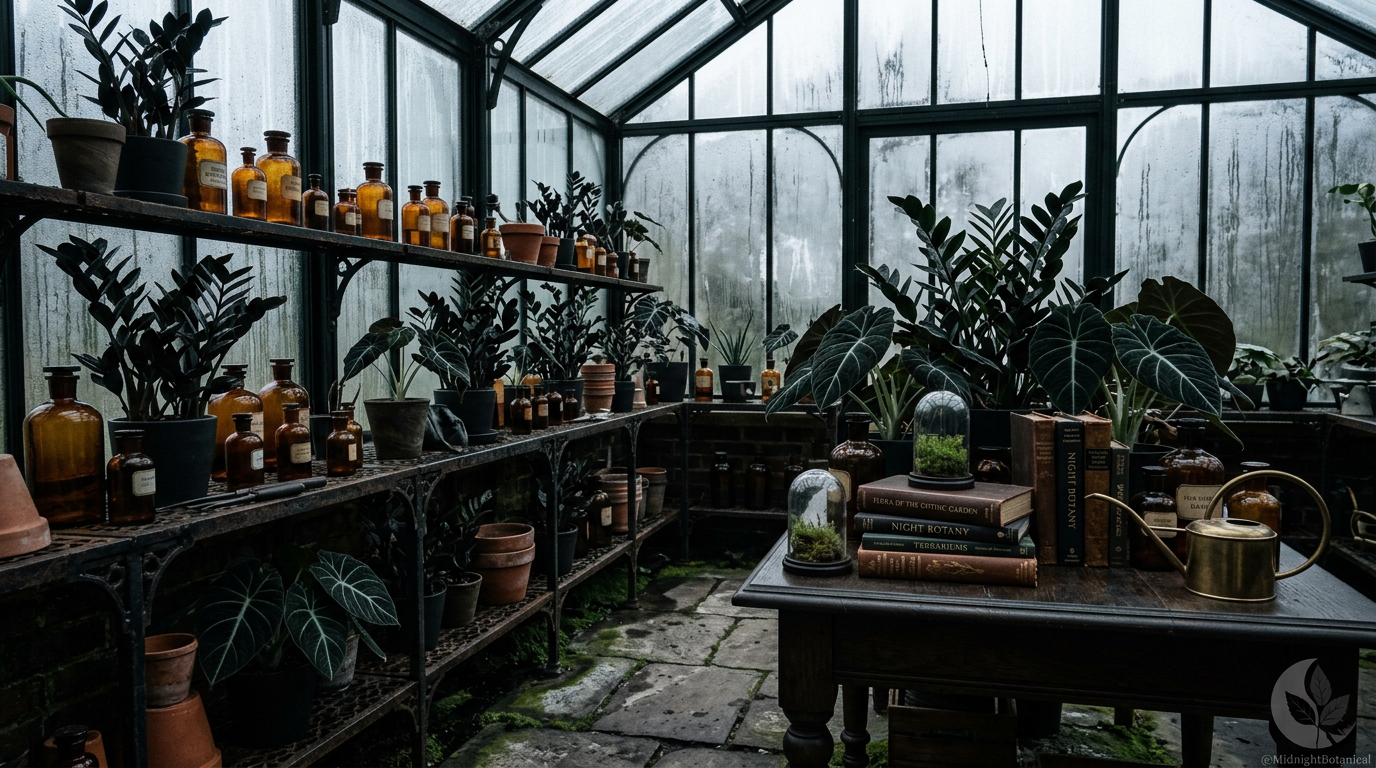
The light in a gothic greenhouse never quite arrives in the ordinary sense. It seeps through glass thick with condensation and mineral dust, arriving at your face diffused and grey and heavy with the smell of living things — damp soil, dried lavender, eucalyptus.
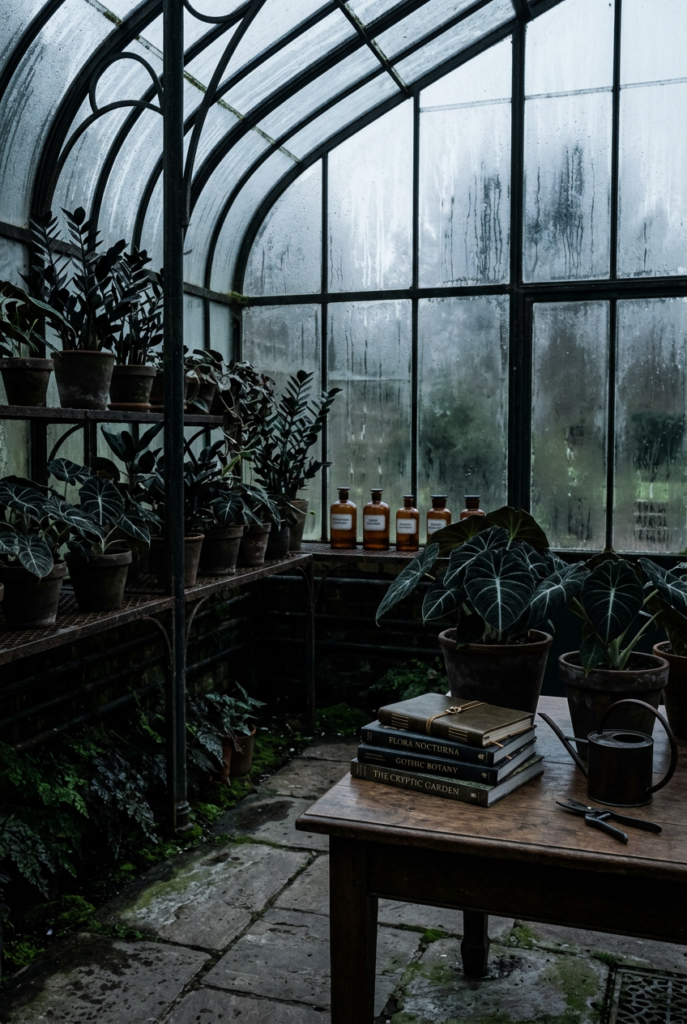
The gothic greenhouse aesthetic — sometimes called witchcore gardening — is not a trend so much as a sensibility. It has existed in herbalists’ workrooms and monastic gardens and the conservatories of Victorian occultists long before Pinterest named it.
This guide is for you. Whether you have a full glass conservatory or a single deep windowsill — what follows is everything you need to build a witchcore plant sanctuary that feels genuinely yours.
The Anatomy of a Gothic Greenhouse
A gothic greenhouse is defined by its atmosphere — the deliberate accumulation of particular things in particular relation to each other.
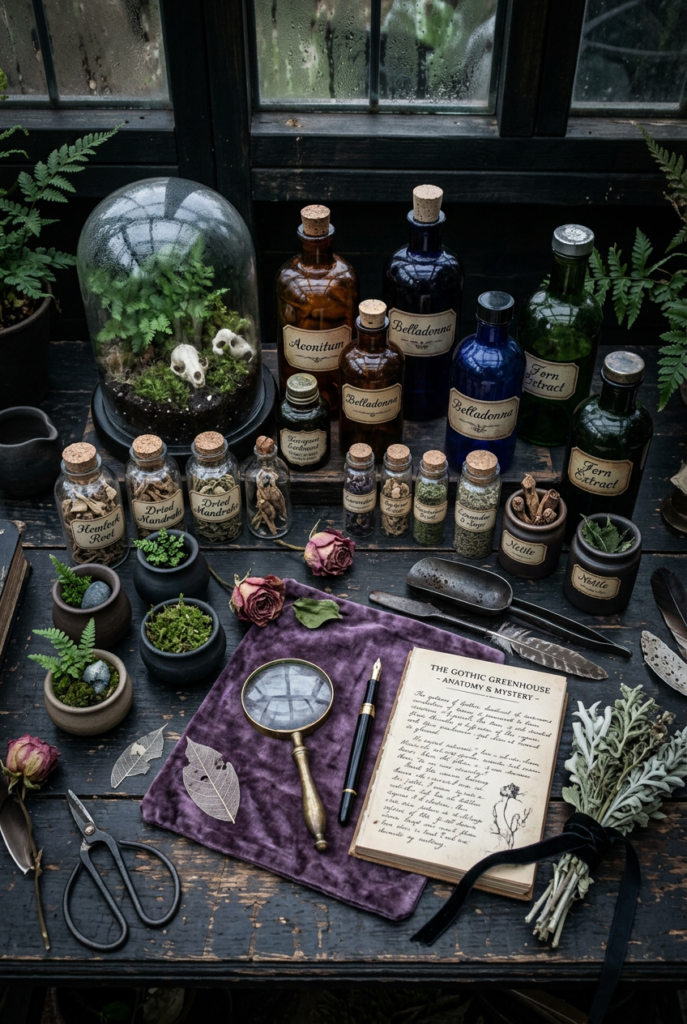
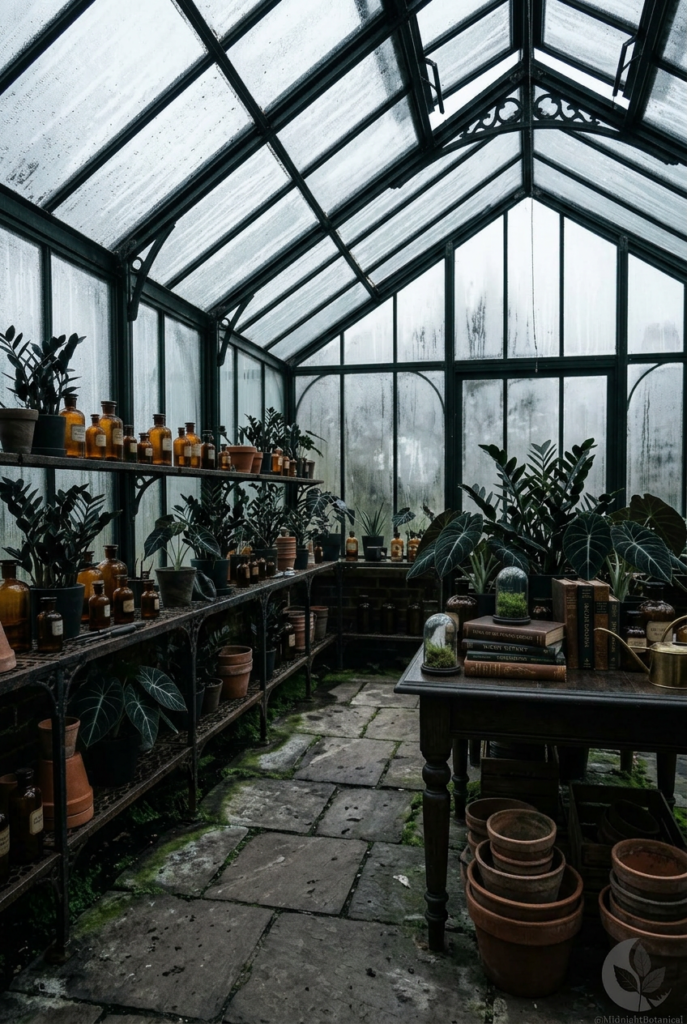
The palette is cool and dark: deep greens that almost read as black, forest shadows, bruised purple of antique velvet. Glass is everywhere — amber bottles catching light, terrarium domes clouding with humidity, specimen jars holding dried herbs in graduated rows. The wood is dark, the ceramics matte and earthen, surfaces worn to a comfortable dullness.
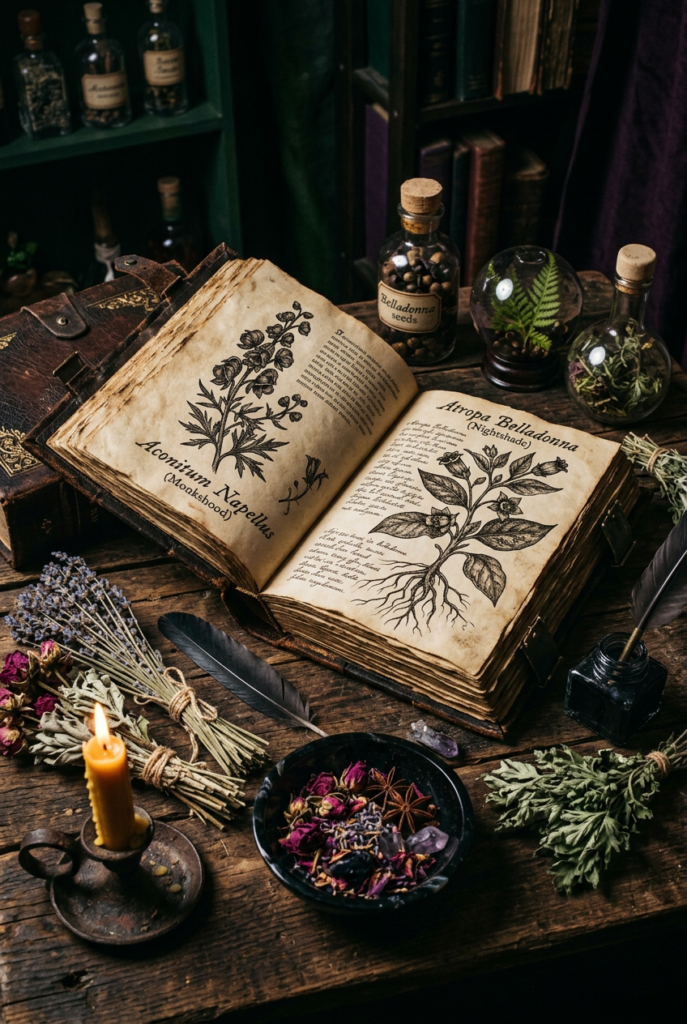
Books belong here. Botanical field guides. A grimoire or two. Dog-eared paperbacks with nature illustrations. They are not decoration — or rather, they are decoration precisely because they are genuinely in use. The scholarly note is essential: the witchcore plant sanctuary is not purely aesthetic. It is a working space. A thinking space. A space that takes its plants seriously.
Scent is the hidden layer that photographs cannot capture: dried lavender bundles, dark incense, the mineral richness of peat, the faintly citrus-medicinal note of eucalyptus. Build the scent layer last, and the space will become something you return to not because it looks right but because it feels right.
The Specimens — Dark Plants for Your Witchcore Sanctuary
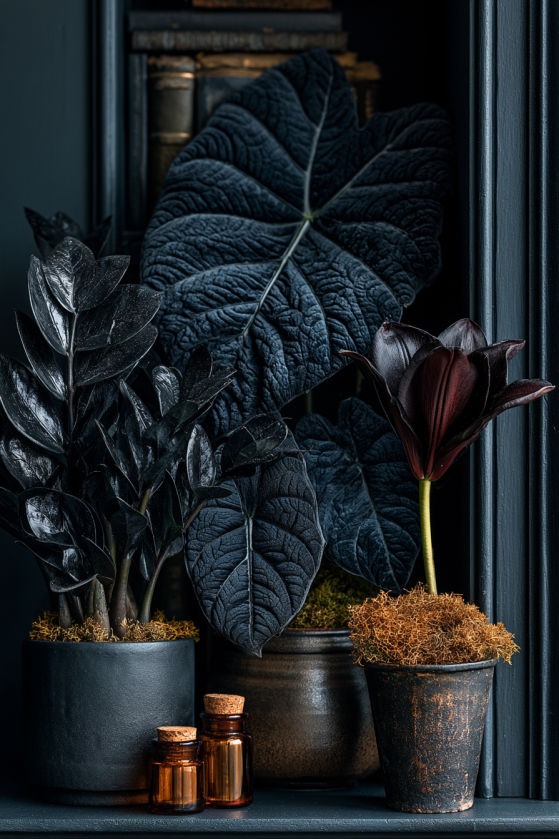
These are not the bright, cheerful plants of a sunlit kitchen. They are specimens of a darkened conservatory — chosen for their shadows, their textures, their willingness to thrive in low light and cool air. A witchcore plant sanctuary is built on specific botanical choices, and the following are the most compelling in 2026.
Raven ZZ Plant Care and Styling Guide
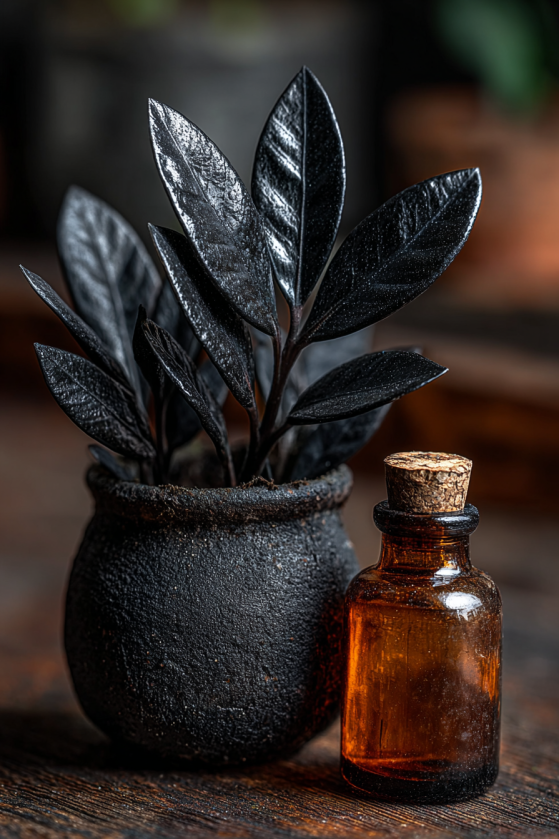
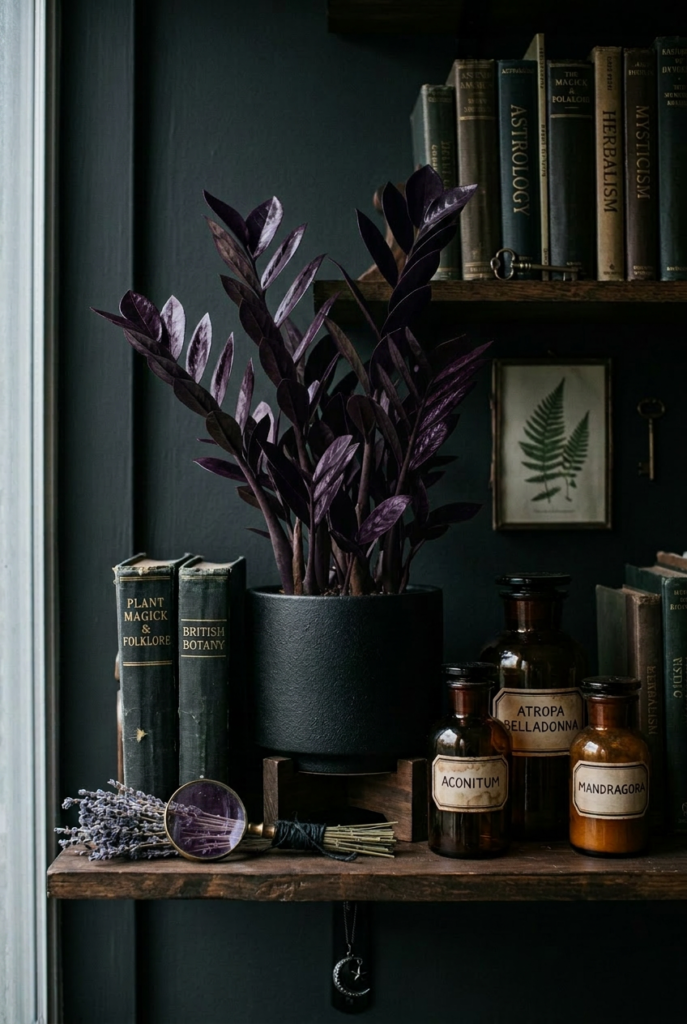
The Raven ZZ is the signature specimen of the witchcore aesthetic. The leaves emerge bright lime green — a false promise — and within weeks deepen to a glossy, extraordinary near-black. Each leaflet holds its own shadow. It tolerates low light, survives drought, requires very little beyond admiration. Plant it in a matte black ceramic pot and set it against a pale plaster wall for maximum drama.
Black Velvet Alocasia
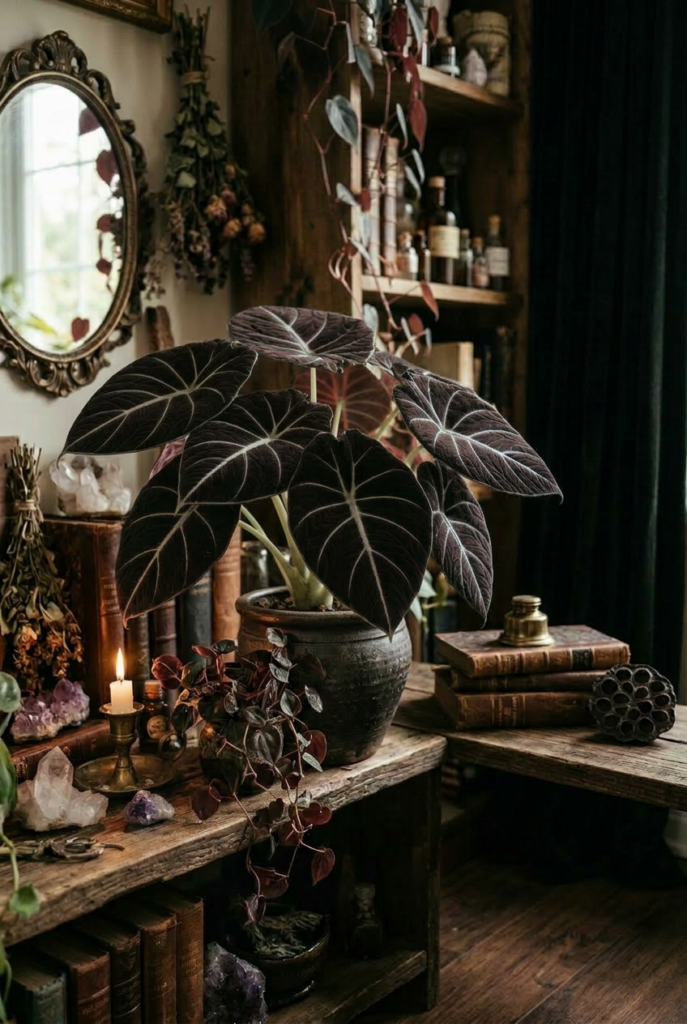
Touch the leaf of a Black Velvet Alocasia and you understand immediately why it belongs in this space. The deep near-black surface has the texture of pressed velvet — cool, slightly resistant, specific in a way most surfaces are not. The silver veins trace across the dark like botanical illustrations drawn in light.
Nightrider Lily
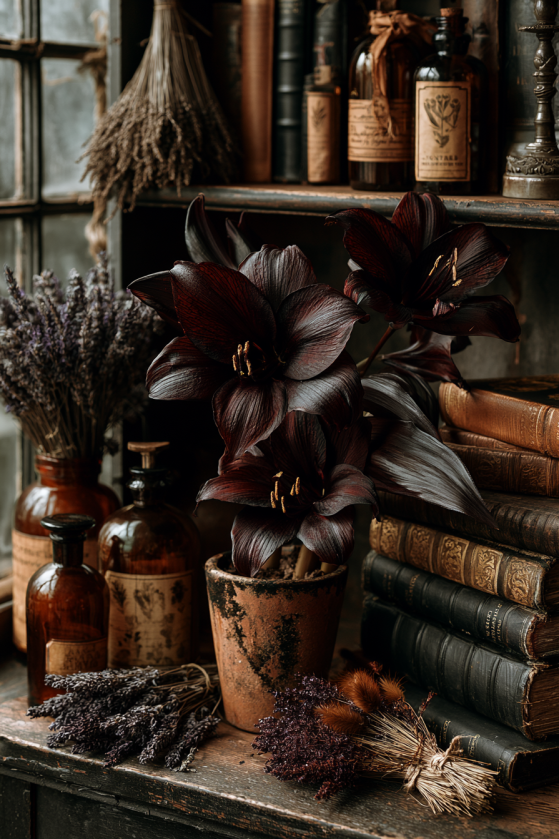
The Nightrider lily is earning its cultural moment in 2026 — its deep maroon-black blooms are striking enough to anchor a whole visual composition. It brings verticality and drama to a planting arrangement. This is a plant people search for by name, which means it converts. Grow it in a tall dark urn or narrow terracotta pot stained with age.
Black Dahlia
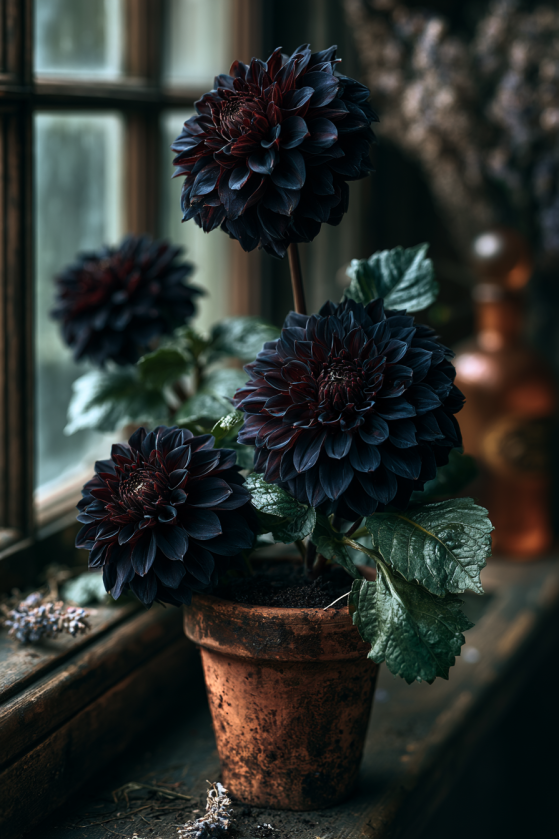
The black dahlia exists in a space between gardening and symbolism. A classic gothic cut flower, it translates well to container growing and adds a seasonal dimension to the sanctuary — the reminder that this is a living space, subject to cycles, to dormancy, to return.
Colocasia Black Magic
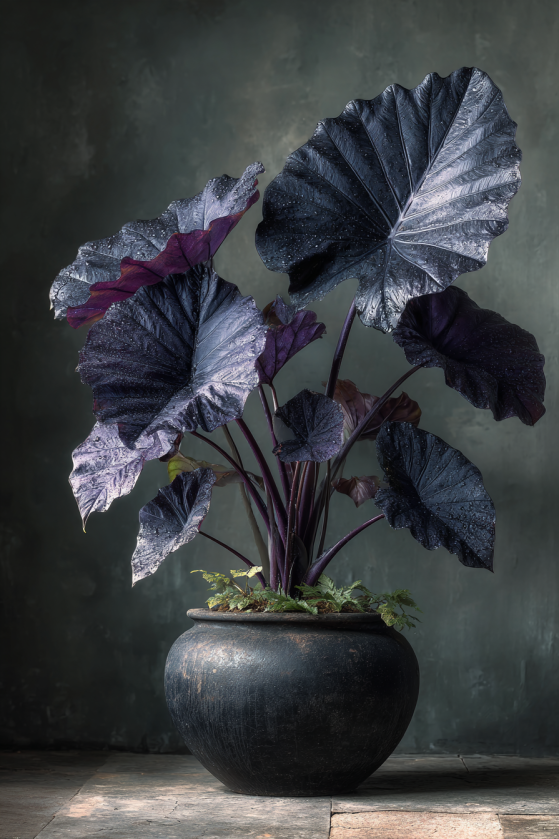
The Colocasia Black Magic is enormous, dramatic, impossible to overlook. The leaves reach the size of dinner plates, their deep near-purple-black surface catching light in long, architectural sweeps. It is the gothic greenhouse at scale — the plant that turns a corner of a room into a statement. Moisture-loving and bold, it rewards attention with growth that is genuinely startling.
Apothecary Shelves and the Art of Botanical Curation
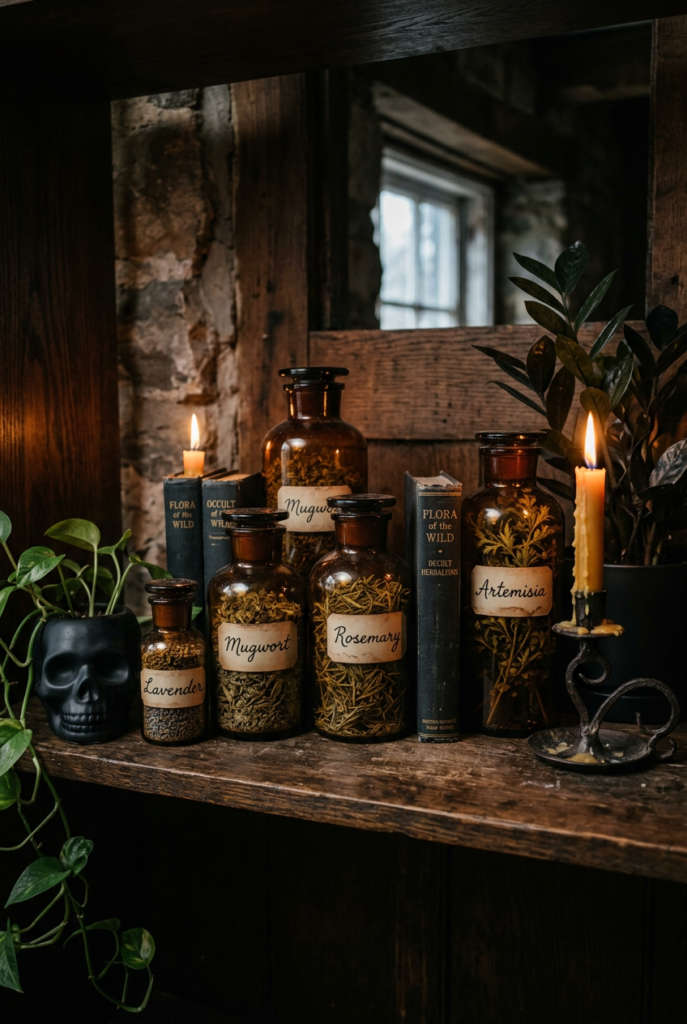
If the plants are the soul of the gothic greenhouse, the apothecary shelf is its memory.
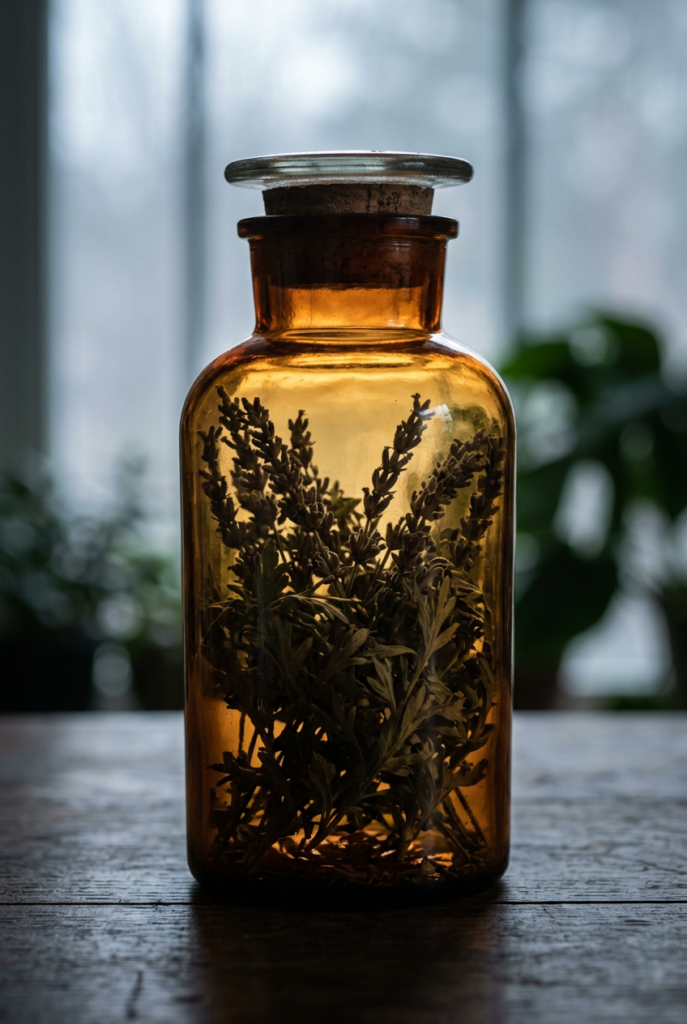
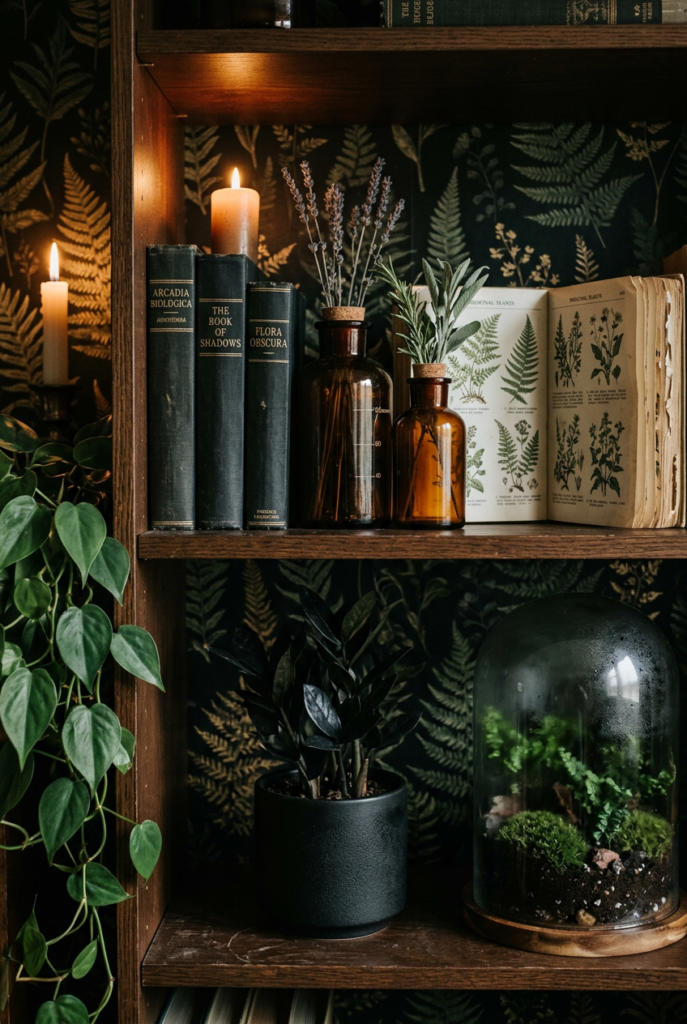
Begin with glass. The amber laboratory bottle is the foundational object here. In amber glass, even ordinary dried lavender looks like something preserved from an 18th-century herbarium. Collect them in odd numbers. Fill some with dried herbs (mugwort, rosemary, artemisia, yarrow), others with crystals or pressed botanical specimens. The graduated height matters: small to tall, or clustered in asymmetric groupings that suggest accumulation.
Books sit between the jars, not behind them. Botanical field guides, folklore collections, mythology texts, plant lore. The spine matters: dark cloth binding, faded gold lettering, the worn look of a book that has been genuinely read.
The skull planter is optional but useful as a symbolic anchor — a small memento mori among living things. Matte black ceramic, small enough to sit behind a terrarium without dominating. A trailing pothos or compact fern in the skull is exactly right.
Candles belong on the apothecary shelf. They serve a ritual function: lighting a candle before working, studying, or tending the plants signals a different kind of time. Choose beeswax or dark wax in unscented or lightly herbal variants.
Building Your Witchcore Sanctuary Without an Actual Greenhouse
The gothic greenhouse is not a structure. It is a quality of attention.
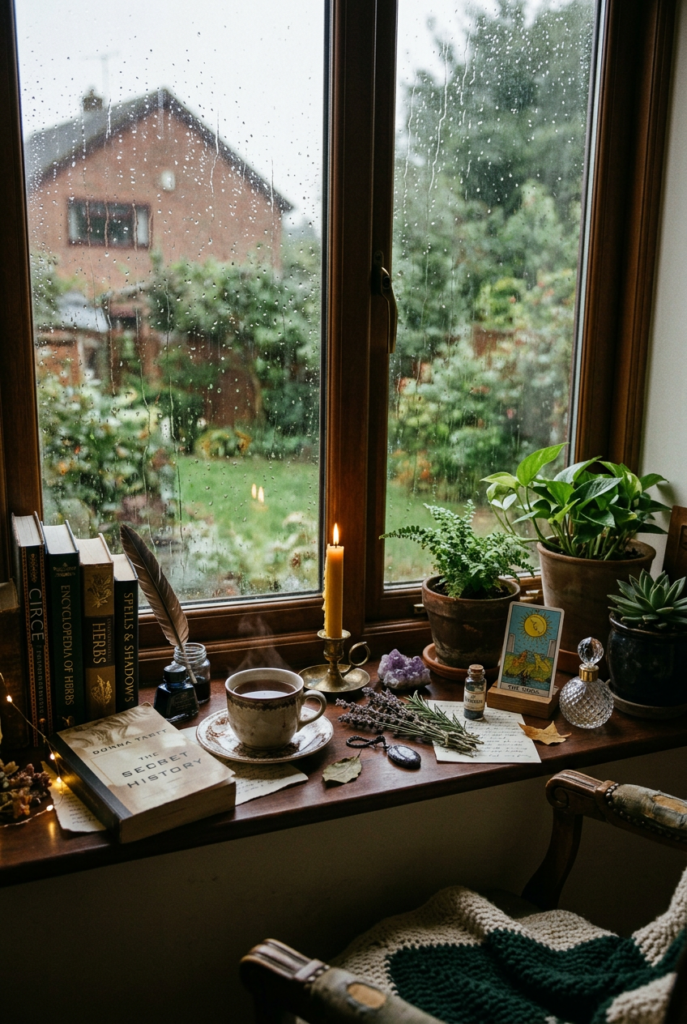
The essential components — diffused light, living specimens, glass vessels, dark surfaces, scholarly objects — can be reproduced in a spare room corner, a deep windowsill, a bookshelf alcove, or even a cluster on a writing desk. What matters is deliberate accumulation: the sense that everything here has been chosen, and that it belongs together.
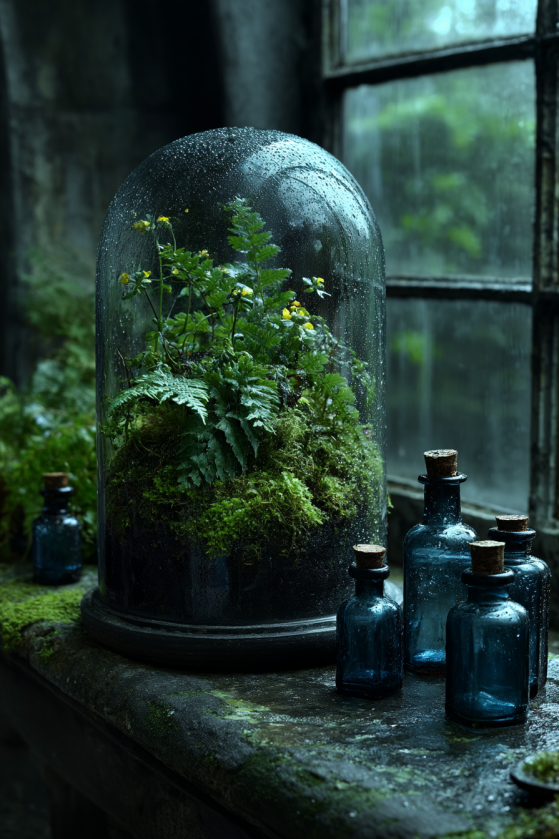
For a windowsill sanctuary: Select north or east-facing windows for their cool, indirect light. The ZZ plant and Alocasia thrive here. A trio of apothecary bottles catches the grey morning light. A single field guide, left open. A small terrarium dome housing a miniature moss garden. This is enough.
For a bookshelf installation: Clear two shelves and treat them as a botanical diorama. The upper shelf: books, bottles, dried herbs, a candle. Dark botanical peel-and-stick wallpaper applied to the back panel transforms an ordinary bookshelf into a dedicated chamber.
For a full-room or conservatory space: Let the plants lead. Place the largest specimens first. Build the apothecary layer around them. Keep the reading corner distinct but contiguous: a chair, a lamp, a side table with books and a single flowering specimen in a dark vessel.
The Scholar’s Corner — Books, Grimoires, and the Dark Academia Reading Nook
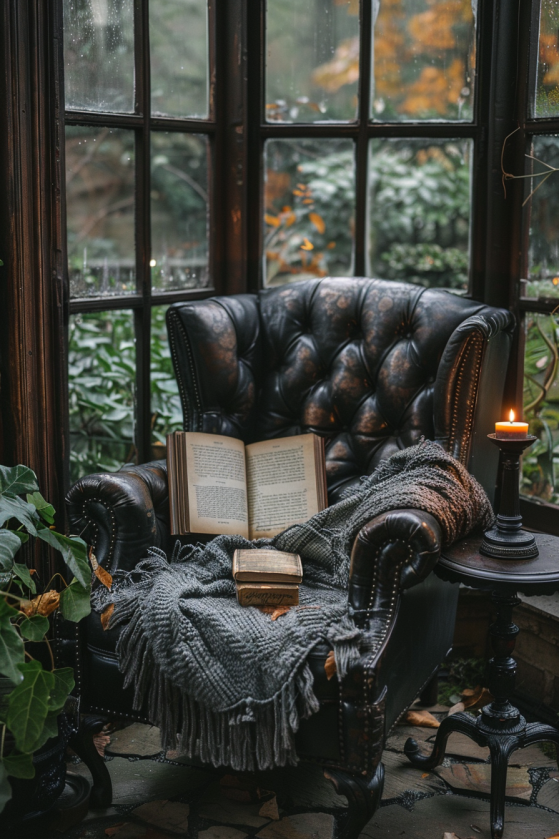
The reading nook in a witchcore plant sanctuary is not separate from the botanical space. It is continuous with it. The chair is turned toward the plants as much as toward the window. The books are the same books you would expect on the apothecary shelf — field guides, herbals, folklore texts — plus whatever you are genuinely reading: dark fantasy, mythological retellings, literary fiction that takes plants seriously as characters.
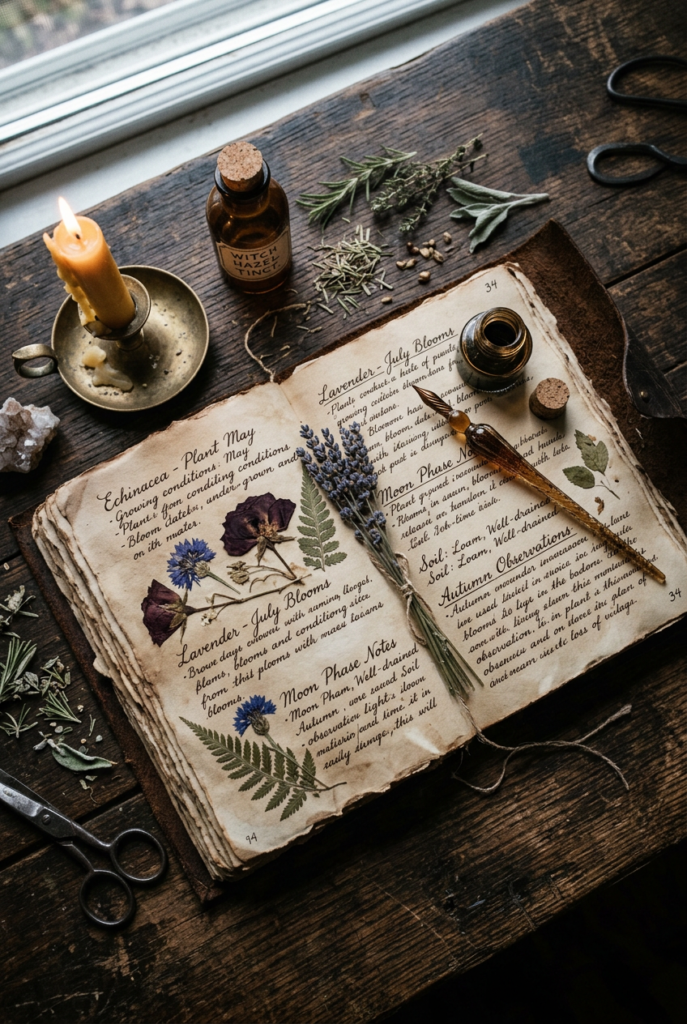
A Book of Shadows or grimoire belongs here not as decoration but as a functioning object — a place to record the growing conditions of your specimens, the dates of blooms, the seasonal observations that accumulate into something that begins to resemble knowledge.
The reading nook is the intellectual heart of the sanctuary. The plants, the books, and the candle are not separate elements. They are a single practice.
Trending This Season
What’s Selling on Pinterest Right Now
1. Witchcore is Pinterest’s officially named 2026 micro-trend — dark academia meets cottagecore meets witchcraft. The saturation window is still open.
2. Dark moody plants are the #1 indoor gardening trend of 2026. The Raven ZZ plant and Nightrider lily are earning early viral traction.
3. Dark academia reading nooks are up +200% in Pinterest search — dedicated boards are pulling 900k+ followers and showing consistent growth into summer.
4. Gothic romance garden aesthetics are surging, driven by the 2026 Wuthering Heights film adaptation.
5. Mystic Outlands is Pinterest Predicts 2026’s official trend aesthetic: smoky greens, mossy textures, mist-inspired dark botanicals. This is @MidnightBotanical’s native visual world.
Affiliate Picks
Disclosure: This post contains affiliate links. If you purchase through these links, I may earn a small commission at no extra cost to you.
1. Matte Black Skull Planter — The memento mori of the apothecary shelf. $18–$45.
2. Amber Apothecary Bottle Set — The foundational glass layer of the gothic greenhouse. $22–$60 for a set of 6.
3. Raven ZZ Plant Seeds / Starter Plant — The defining specimen of the witchcore plant aesthetic. $8–$35.
4. Grimoire Journal / Book of Shadows — Hand-stitched binding, aged paper, botanical cover illustration. $28–$95.
5. Dark Botanical Peel-and-Stick Wallpaper — Transform a bookshelf alcove into something genuinely atmospheric. $28–$60 per panel.
6. Nightrider Lily Bulbs — The statement piece of any gothic greenhouse. $10–$30 for bulbs.
7. Black Velvet Alocasia — Near-black velvet leaf surface with silver veins. $15–$40.
8. Colocasia Black Magic Bulbs — Architectural, dinner-plate-sized near-black foliage. $15–$45 for bulbs.
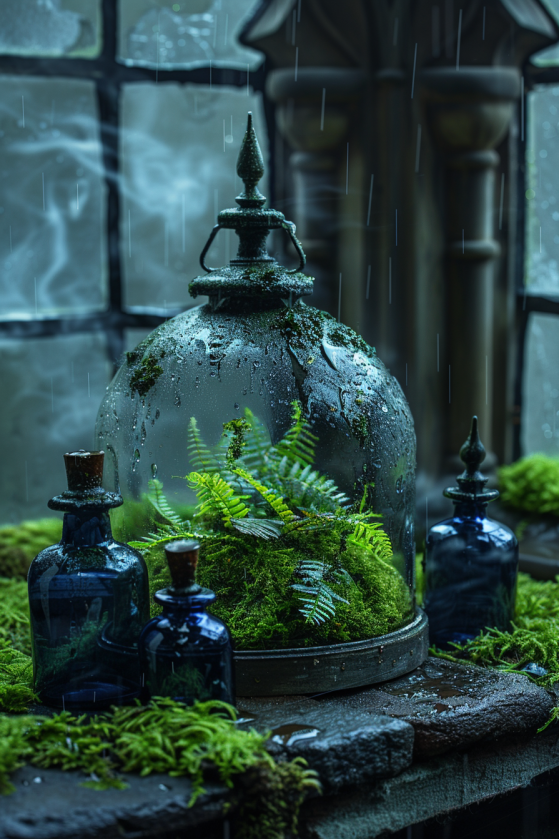
The gothic greenhouse does not demand a plot of land or a glass structure or a budget for architectural renovation. It demands, instead, a particular quality of attention — the slow accumulation of chosen things, the practice of tending what grows, the willingness to let a space become genuinely, specifically yours.
Begin with one specimen. A single Raven ZZ plant in a matte ceramic pot. One amber bottle, one field guide left open to the page you are actually reading. The sanctuary will build itself around you if you let it.
If this post gave you a sense of where to begin, save it to your most atmospheric Pinterest board — and return to it when you need a quiet moment of direction.
The specimen endures. Begin.